Masked dances, brocade costumes and thousands of local worshippers — a visitor's guide to Bhutan's sacred festivals.
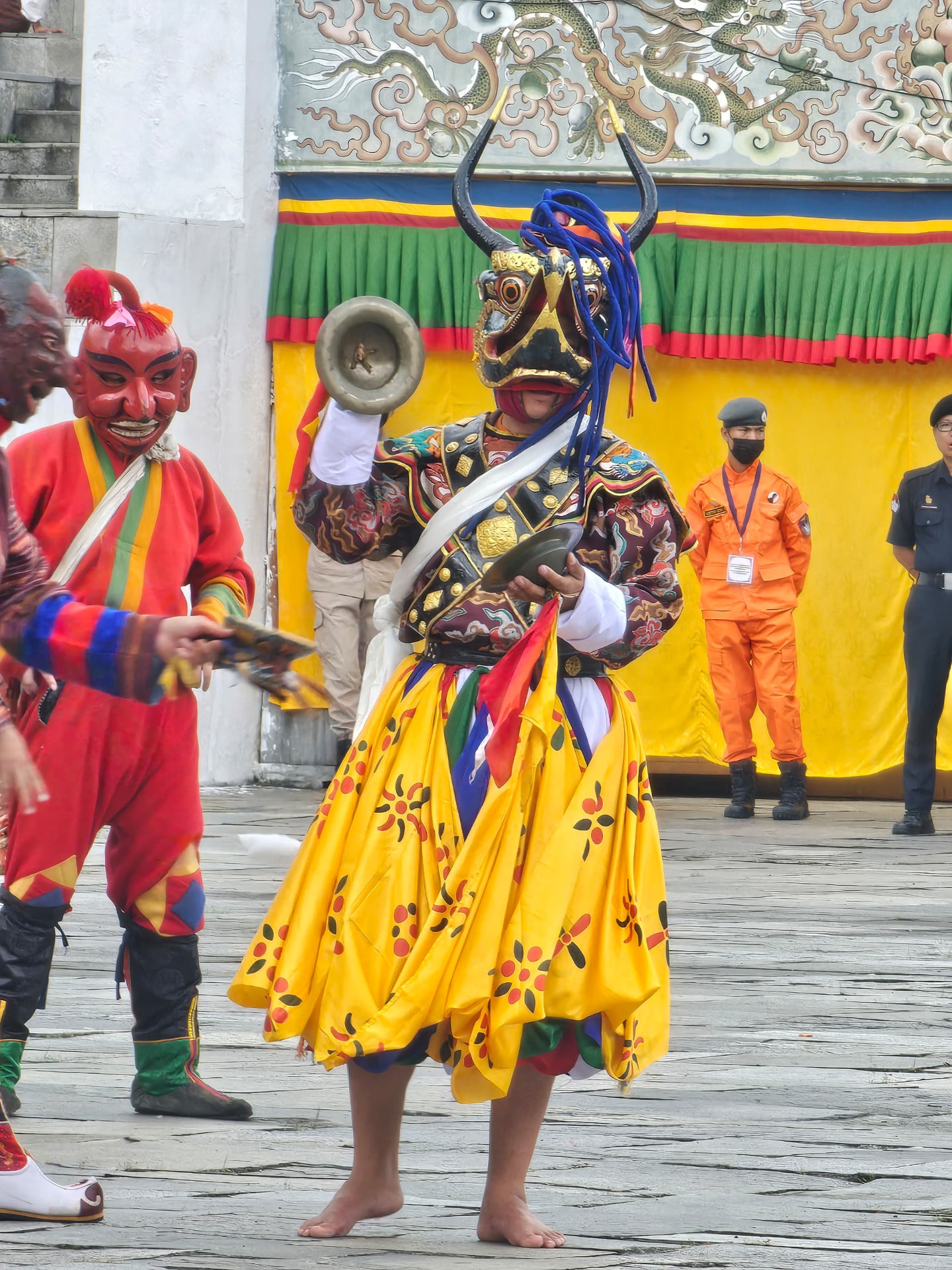
Every district in Bhutan celebrates a tshechu — a festival of sacred cham dances performed by monks and laymen in masks of gods, demons and animals. For Bhutanese people, watching a tshechu is an act of devotion; for visitors, it is the most vivid window into the living culture of the kingdom.
Come early, stay late
Festival days begin in the morning, and the courtyard fills with families in their finest dress long before the first dance. Arrive early to watch the courtyard fill, and stay through the day — the dances build in drama as the hours pass, each one retelling an episode from the life of Guru Rinpoche or the great saints.
Dress and behave as a guest
Modest dress is required in dzong courtyards — long trousers or a full skirt, covered shoulders. Walk clockwise around sacred spaces, ask before photographing individuals at close range, and follow the lead of the crowd during the unfurling of the thongdrel, the great embroidered banner whose first sight is said to bless all who see it.
Which festival is right for you?
Thimphu's tshechu is the largest and most accessible; Paro's is beloved for its dawn thongdrel; Punakha's is set against the kingdom's most beautiful dzong; Wangdue Phodrang's is famous for its mask artistry. We can help you match the festival, the dates and the valleys into one seamless journey.
Dreaming of Bhutan after reading this?
Tell us how you'd love to experience the kingdom, and we'll help you plan a journey to remember.
Plan My Trip